SLAJ Condemns SLPP Publicity Secretary’s Allegations Against Journalist Victor Jones
The Sierra Leone Association of Journalists (SLAJ) expresses serious concern over statements made by the National Publicity Secretary of the ruling Sierra Leone People’s Party (SLPP), Mr.
Moses Sellu Mambu, who allegedly accused journalist Victor Jones of AYV Media Empire of pursuing an agenda against the party and conspiring to submit a false report against him to SLAJ.
On 21 October 2026, SLAJ received a formal complaint from Mr. Jones concerning remarks Mr.
Mambu allegedly made during the Liberty TV Online Breakfast Show, hosted by Khadija Bangura and Mabel Kabba, on 19 October 2026.
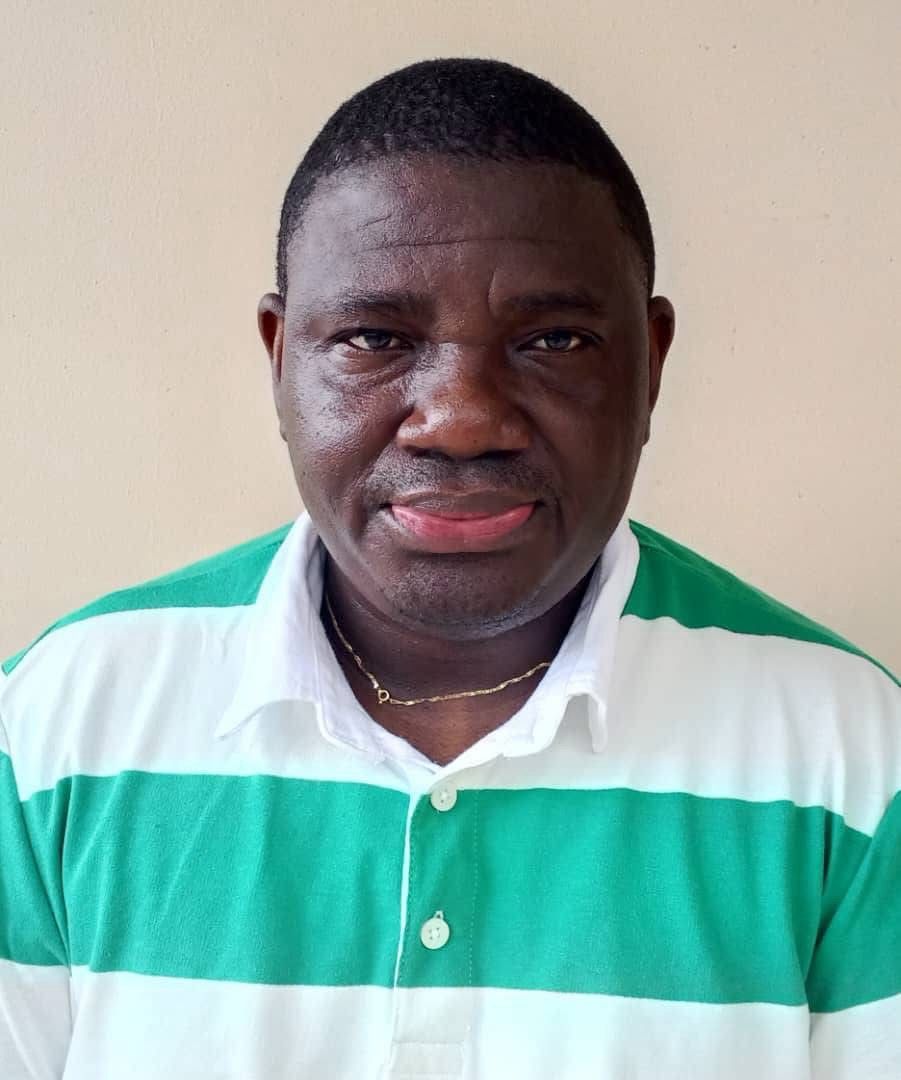
Victor Jones Journalist AYV Media
In the broadcast, Mr. Mambu reportedly accused Mr. Jones of being among journalists setting an agenda against the SLPP and alleged that Mr. Jones and fellow journalist Thomas Dixon had conspired to submit a false report against him to SLAJ.
When contacted by SLAJ Secretary General Edward Farah Marah for his response, Mr. Mambu stated that his remarks about an agenda against the SLP referred to media houses rather than Mr. Jones personally. However, he maintained his allegation that Mr. Jones and Mr. Dixon had conspired to submit a false report against him.
Moses Mambu. SLPP Member
Having reviewed the available evidence, including a video recording of the broadcast, SLAJ is concerned that the statements made against Mr. Jones could undermine his professional reputation and expose him to unwarranted hostility.
SLAJ also wishes to clarify that its records contain no evidence of a false report submitted by Mr. Jones and Mr. Dixon against Mr. Mambu. The Association therefore rejects the allegation as unsupported by its records and calls for responsible public communication on matters involving journalists and their professional work.
SLAJ President Alhaji Manika Kamara said, “Journalists have a constitutional responsibility to inform the public, scrutinise those in authority and hold power to account. Their professional work should not be portrayed as an agenda against a political party just because their reporting may be critical or uncomfortable. Any concerns about a journalist’s conduct should be raised through appropriate channels and addressed on the basis of evidence.”
SLAJ is particularly concerned about the potential implications of publicly associating a named journalist with hostility towards a ruling political party in an already polarised environment. Such statements can expose journalists to intimidation, harassment and threats to their personal safety.
Political leaders and party officials must therefore exercise restraint and ensure that their public statements do not encourage hostility towards media practitioners.
The Association calls on Mr. Mambu to exercise greater responsibility in his public pronouncements and to respect the independence and professional role of journalists.
SLAJ also encourages all political actors to address grievances involving the media through constructive engagement and established complaint mechanisms.
SLAJ remains committed to promoting ethical and responsible journalism while defending press freedom and the rights, safety and professional dignity of journalists across Sierra Leone.
The Association will continue to engage political leaders and other stakeholders to strengthen mutual understanding and ensure that journalists can carry out their duties without fear or favour.
SLAJ Concludes Stakeholders’ Validation of Proposed Stand-Alone Chapter 12 on Press Freedom and Free Speech.
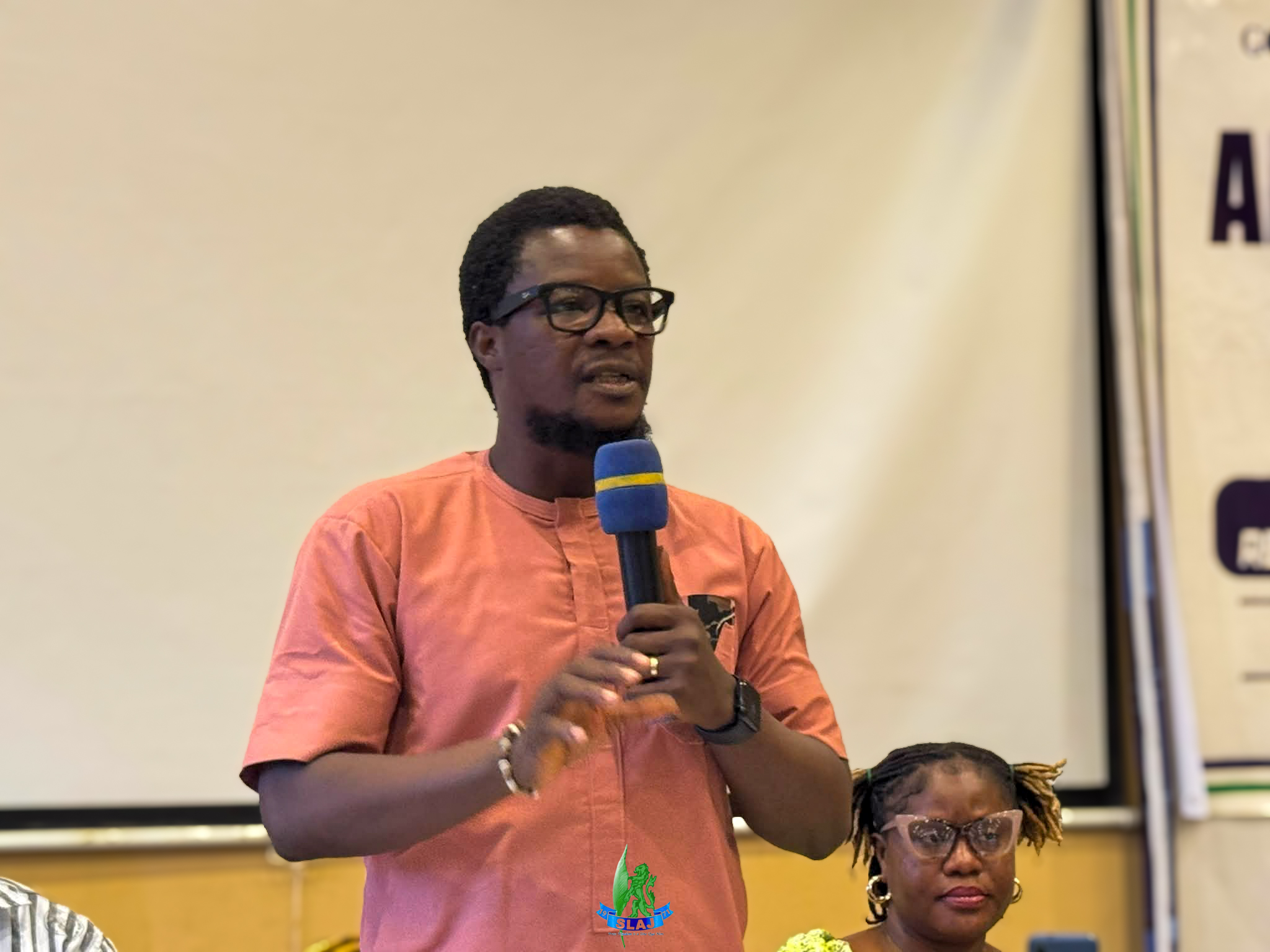
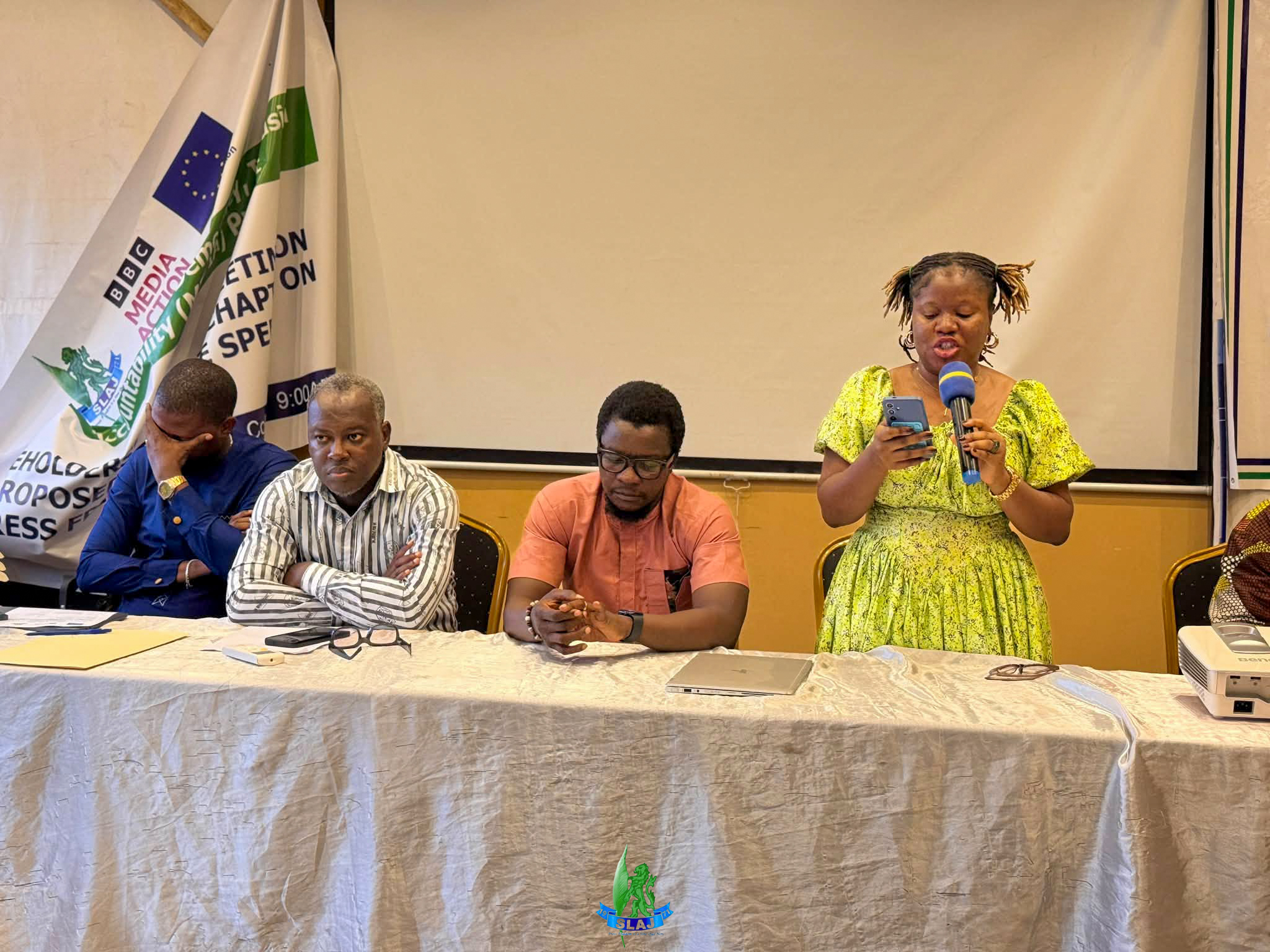
The Sierra Leone Association of Journalists (SLAJ) on Friday, 23 October 2026, concluded a stakeholders’ validation exercise on the proposed stand-alone Chapter 12 on Press Freedom and Free Speech in Sierra Leone’s national Constitution.
Media experts, civil society organisations, legal practitioners, and other stakeholders critically reviewed and validated the proposed chapter, describing constitutional protection of press freedom and freedom of expression as essential to democracy, good governance, accountability, and national development.
Speaking at the ceremony, the Coordinator of the Independent Radio Network (IRN), Ransford Wright, said the process began during the Justice Cowan-led Constitutional Review Committee. He described reaching the validation stage as a significant achievement, not only for SLAJ and the media fraternity but also for citizens across the country.
Mr. Wright stressed that political will would be crucial to ensuring the successful adoption of the proposed chapter.
Representing the Media Reform Coordinating Group (MRCG), Augustine S. James said the organisation had been involved in the process from its inception, with its National Coordinator playing a vital role throughout. He called for greater collaboration among stakeholder, adding that the team needs to engage partners to advocate for the inclusion of the proposed chapter in the ongoing constitutional review process.
The President of Women in the Media Sierra Leone (WIMSAL), Eastina Taylor-Tucker, highlighted the importance of press freedom to female journalists, noting that women in the profession continue to face numerous challenges. She emphasised the need for stronger constitutional protections to enable female journalists to work freely, safely, and independently, without undue interference.
Meanwhile, the Project Manager at BBC Media Action, Alphaso Kamara, said the media had a strong interest in promoting good governance and that a free and independent media was essential to national development.
Mr. Kamara called for collective efforts to protect press freedom, stressing that the responsibility should not rest solely with journalists. He also emphasised that press freedom must go hand in hand with responsible journalism.
The President of SLAJ, Alhaji Manika Kamara, said the association had made tremendous efforts to advance the process, including engagements with the Office of the Attorney-General, the Minister of Information and Civic Education, and other relevant stakeholders.
President Kamara noted that, if adopted, the proposed stand-alone chapter would explicitly safeguard press freedom, guarantee freedom of expression, and strengthen public trust in the media and democratic institutions.
Media practitioners, civil society representatives, and legal experts who participated in the validation exercise also underscored the importance of constitutional safeguards for freedom of expression. They called for the proposed chapter to extend its protections beyond traditional media to include new and digital media platforms, in recognition of the rapidly evolving media landscape.
Following the adoption of the validated document, SLAJ is expected to embark on lobbying and public awareness campaigns to promote the proposed chapter and build broader public and institutional support for its inclusion in the national Constitution.
Stakeholders expressed optimism that the proposed reforms could mark a significant milestone in strengthening press freedom, safeguarding freedom of expression, and deepening democratic governance in Sierra Leone.
The validation exercise was led by Paul Kamara, Esq., with technical guidance from Dr. Isaac Massaquoi, who conducted the desk review of the document to inform the strategic media campaign.
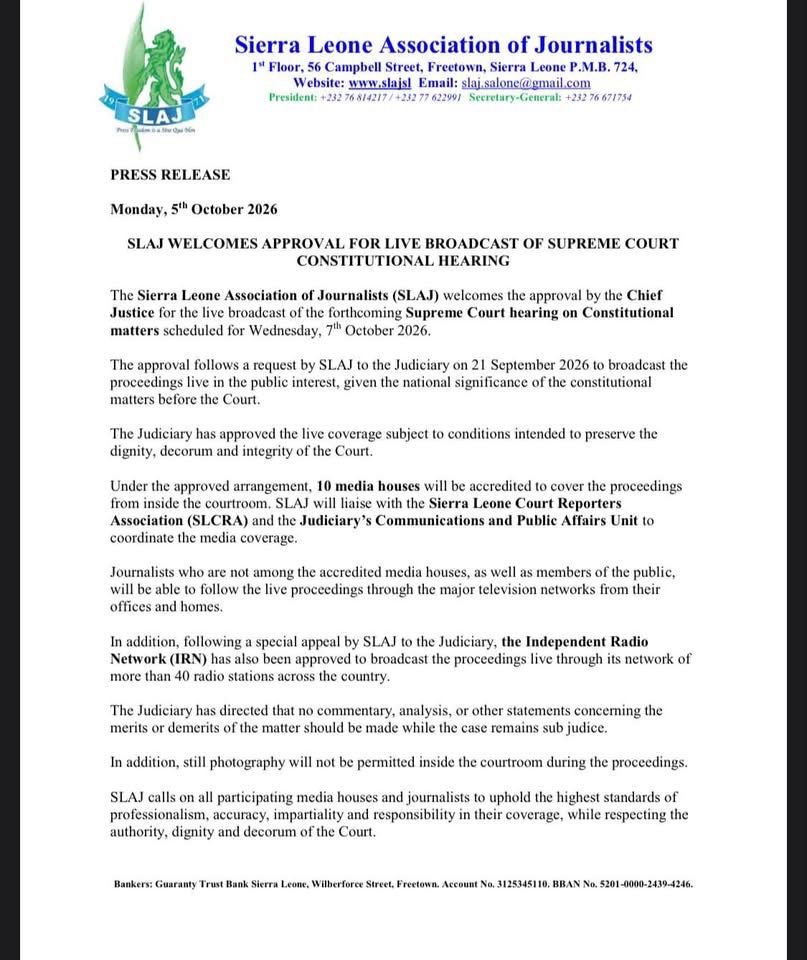
PRESS RELEASE
Monday, 5″‘ October 2026
SLAJ WELCOMES APPROVAL FOR LIVE BROADCAST OF SUPREME COURT
CONSTITUTIONAL HEARING
The Sierra Leone Association of Journalists (SLAJ welcomes the approval by the Chief Justice for the live broadcast of the forthcoming Supreme Court hearing on Constitutional matters scheduled for Wednesday, 7″ October 2026.
The approval follows a request by SLAJ to the Judiciary on 21 September 2026 to broadcast the proceedings live in the public interest, given the national significance of the constitutional matters before the Court.
The Judiciary has approved the live coverage subject to conditions intended to preserve the dignity, decorum and integrity of the Court.
Under the approved arrangement, 10 media houses will be accredited to cover the proceedings from inside the courtroom. SLAJ will liaise with the Sierra Leone Court Reporters Association (SLCRA) and the Judiciary’s Communications and Public Affairs Unit to coordinate the media coverage.
Journalists who are not among the accredited media houses, as well as members of the public, will be able to follow the live proceedings through the major television networks from their offices and homes.
In addition, following a special appeal by SLAJ to the Judiciary, the Independent Radio Network (IRN) has also been approved to broadcast the proceedings live through its network of more than 40 radio stations across the country.
The Judiciary has directed that no commentary, analysis, or other statements concerning the merits or demerits of the matter should be made while the case remains sub judice.
In addition, still photography will not be permitted inside the courtroom during the proceedings.
SLAJ calls on all participating media houses and journalists to uphold the highest standards of professionalism, accuracy, impartiality and responsibility in their coverage, while respecting the authority, dignity and decorum of the Court.
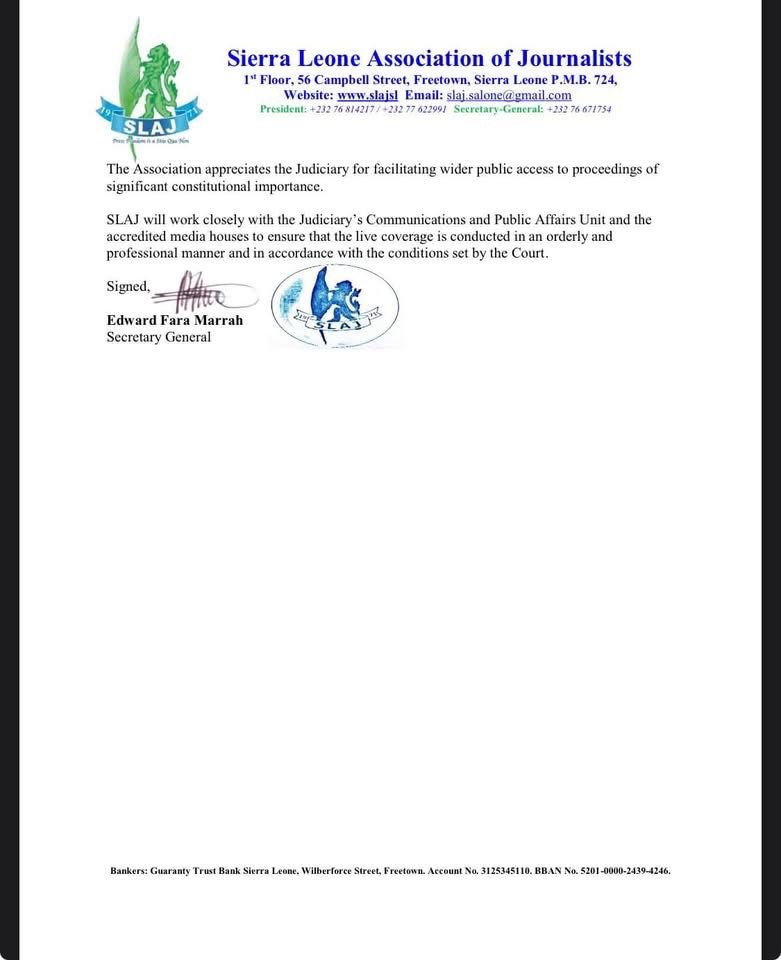
The Association appreciates the Judiciary for facilitating wider public access to proceedings of significant constitutional importance.
SLAJ will work closely with the Judiciary’s Communications and Public Affairs Unit and the accredited media houses to ensure that the live coverage is conducted in an orderly and professional manner and in accordance with the conditions set by the Court.