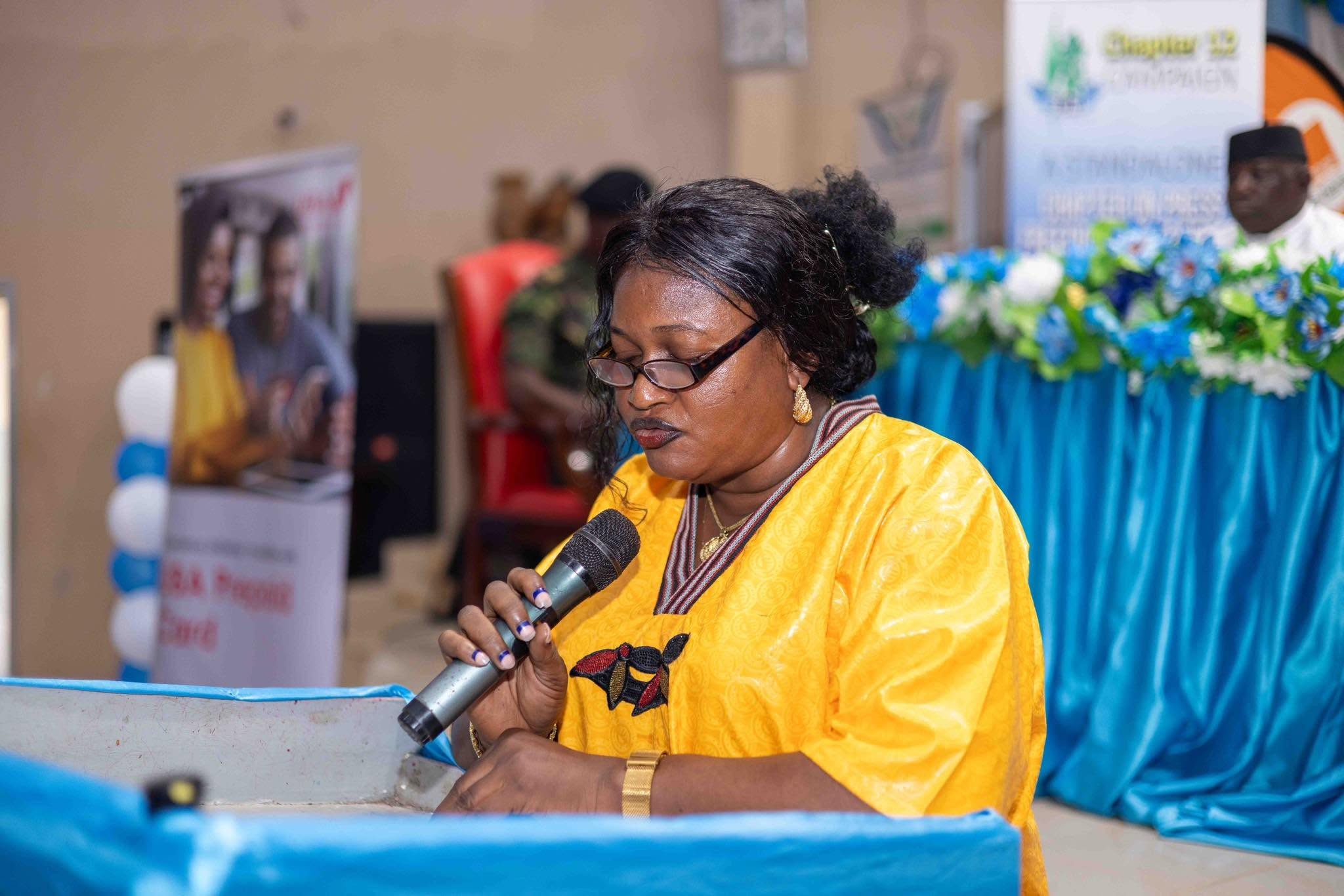
STATEMENT BY THE DIRECTOR OF INFORMATION, MINISTRY OF INFORMATION AND CIVIC EDUCATION AT THE SIERRA LEONE ASSOCIATION OF JOURNALISTS (SLAJ) ANNUAL GENERAL MEETING 2026.
Theme: “Strengthening Sierra Leone’s Economy Through Responsible Journalism”
University of Makeni (UNIMAK) Auditorium, Makeni 11th-13th June 2026.
Ladies and Gentlemen.
The Annual General Meeting is not merely a constitutional requirement of your esteemed Association; it is a demonstration of democratic governance in practice. It is a moment for introspection, institutional renewal, and collective commitment to the values that define journalism as a public service profession.
At first glance of the theme, journalism and economic development may appear to occupy separate spheres. However, upon closer examination, it becomes evident that the relationship between the two is both profound and inseparable, because no modern economy can thrive in an environment characterised by misinformation, opacity, weak accountability, and limited access to credible information.
Indeed, information itself has become one of the most valuable resources of the twenty-first century. Economists increasingly describe information as a strategic asset that influences markets, shapes investment decisions, affects consumer confidence, and determines public trust in institutions. This makes journalism as not only a democratic institution, but also as an economic institution.
Responsible journalism contributes significantly to economic growth in several ways.
First, it promotes transparency and accountability. Investors, entrepreneurs, development partners, and citizens require reliable information to make informed decisions. Where public institutions are held accountable through professional reporting, confidence in governance improves. Where corruption is exposed responsibly and fairly, public resources are better protected. Where public policies are explained accurately, citizens are better able to participate in economic opportunities.
Second, responsible journalism enhances investor confidence. Both domestic and foreign investors assess not only economic indicators but also the quality of information available within a country. They seek environments where facts can be verified, policies can be scrutinized, and public discourse is grounded in truth rather than speculation. A media ecosystem that is professional, ethical, and fact-based therefore contributes directly to the attractiveness of a nation as an investment destination. That is why in my opinion, the media ecosystem is an important tool in PEST analysis, which skilled investors use before investing their resources.
Third, responsible journalism supports social stability, which remains a prerequisite for economic development. History teaches us that economies flourish where peace, social cohesion, and public trust exist. Conversely, misinformation, inflammatory reporting, and irresponsible communication can generate tensions that undermine economic progress. Journalists therefore carry a responsibility that extends beyond reporting events; they are custodians of social trust. Their words have the power to build confidence or create uncertainty, to promote unity or deepen divisions, and to encourage constructive engagement or fuel unnecessary conflict.
Distinguished Participants, the rise of digital technology and social media has transformed the information environment in unprecedented ways. Today, information travels across continents in seconds. News no longer waits for the next day’s newspaper or the evening broadcast. Every citizen with a smartphone has become a potential publisher. While these developments have expanded access to information, they have also created significant challenges.
Thus, we now confront the growing threats of misinformation, disinformation, fabricated content, manipulated images, and coordinated campaigns designed to mislead the public. In such an environment, professional journalism becomes even more important. The distinction between a journalist and a content creator lies not merely in the ability to communicate but in the commitment to verification, balance, fairness, and ethical responsibility.
Responsible journalism requires rigorous fact-checking. It requires the verification of sources.
It requires respect for professional ethics. It requires a commitment to accuracy even when speed may appear more attractive. Most importantly, it requires an unwavering dedication to the truth.
As a Ministry, we continue to encourage media practitioners to embrace these principles because they form the foundation upon which public trust is built.
Ladies and Gentlemen, The Government of Sierra Leone recognizes the indispensable role of the media in democratic governance and national development. Over the years, significant efforts have been undertaken to create an enabling environment for media freedom and responsible journalism. Among the most notable reforms was the repeal of Part V of the Public Order Act of 1965, which decriminalized libel and marked a historic milestone in Sierra Leone’s democratic journey. This reform demonstrated the Government’s commitment to strengthening freedom of expression and promoting a more open and democratic society.
However, freedom must always be accompanied by responsibility. The exercise of media freedom carries corresponding obligations to professional ethics, national cohesion, and public interest. The objective is not merely to protect freedom of expression but to ensure that such freedom contributes positively to national development. The Ministry of Information and Civic Education therefore remains committed to constructive engagement with the media sector. We believe that government and journalists need not exist as adversaries. Rather, both institutions share a common responsibility to serve the public interest. While journalists have a duty to scrutinize government actions, government equally has a duty to provide timely and accurate information to citizens. The relationship should therefore be characterized by mutual respect, professionalism, transparency, and constructive dialogue.
Distinguished Colleagues, As Sierra Leone advances the objectives of the Medium-Term National Development Plan and the broader vision of sustainable national transformation, the media has a critical role to play in educating citizens about development initiatives, monitoring implementation processes, amplifying community voices, and promoting informed public participation. The success of national development cannot depend solely on government action. It requires active collaboration among public institutions, civil society, the private sector, development partners, and the media. Journalists therefore stand at the center of this collaborative effort.
Through responsible reporting, the media can help bridge information gaps, promote civic understanding, and strengthen public confidence in development processes. Today, as we discuss economic growth, we must also acknowledge the challenges confronting the media industry itself. Media houses continue to face financial constraints. The digital transformation of information has disrupted traditional business models.
Competition for advertising revenue has intensified. The demand for technological adaptation continues to grow. These realities require innovative thinking, institutional resilience, and strategic partnerships to ensure the sustainability of independent and professional journalism.
It is our collective responsibility to support an environment in which credible journalism can flourish while maintaining its independence and integrity.
Ladies and Gentlemen, allow me to commend SLAJ for its continued efforts in promoting media professionalism, defending press freedom, and advancing ethical journalism in Sierra Leone.
The Association has remained a critical stakeholder in democratic governance and national development. I equally wish to recognize the contribution of journalists across the country who continue to serve communities despite numerous challenges. Your commitment to informing, educating, and empowering citizens remains invaluable to our democracy. As we celebrate excellence through the SLAJ/IMC National Media Awards, let us also celebrate the ideals that make journalism a noble profession: truth, integrity, objectivity, fairness, courage, and public service.
These values remain as relevant today as they have ever been. In conclusion, let me reiterate that strengthening Sierra Leone’s economy is not solely the responsibility of economists, policymakers, or business leaders. It is a national undertaking that requires the contribution of every sector, including the media. Responsible journalism strengthens accountability. Responsible journalism strengthens public trust. Responsible journalism strengthens democratic governance. And ultimately, responsible journalism strengthens economic development.
Let us therefore continue to work together to build a media landscape that is professional, ethical, independent, and development oriented. A media landscape that informs without misleading.
A media landscape that scrutinizes without sensationalizing. A media landscape that contributes meaningfully to national progress. Together, we can ensure that journalism remains not only a pillar of democracy but also a catalyst for economic transformation and sustainable development in Sierra Leone. I thank you for your attention.
God bless the Sierra Leone Association of Journalists. God bless the Republic of Sierra Leone.
Thank you.